
Easter: Holy Week Rugs – Alfombras de Semana Santa
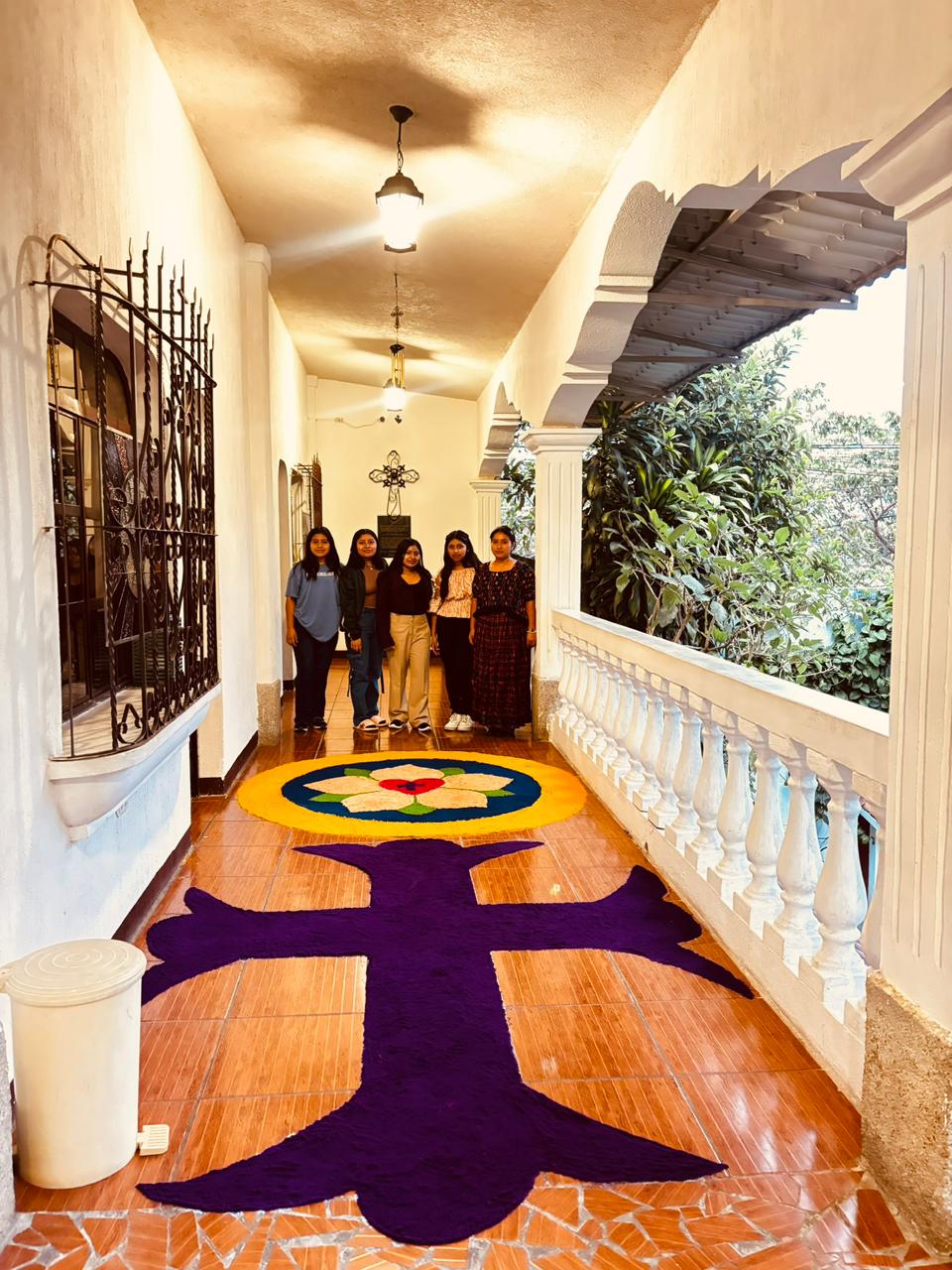
The Easter carpets in Guatemala are expressions of ephemeral art that blend faith, tradition, and cultural syncretism. Made primarily from colored sawdust, corozo, and flowers, they represent an offering of devotion and gratitude to Jesús Nazareno. This practice is part of a deeply rooted tradition in the country.
At ILAG, the creation of carpets is carried out as part of this cultural heritage and also as a tangible expression of our faith. Guatemala is, to a large extent, an oral culture; therefore, visible and concrete expressions are fundamental both for communicating and for understanding history and learning processes. In this sense, the carpets become a manifestation of popular theology.
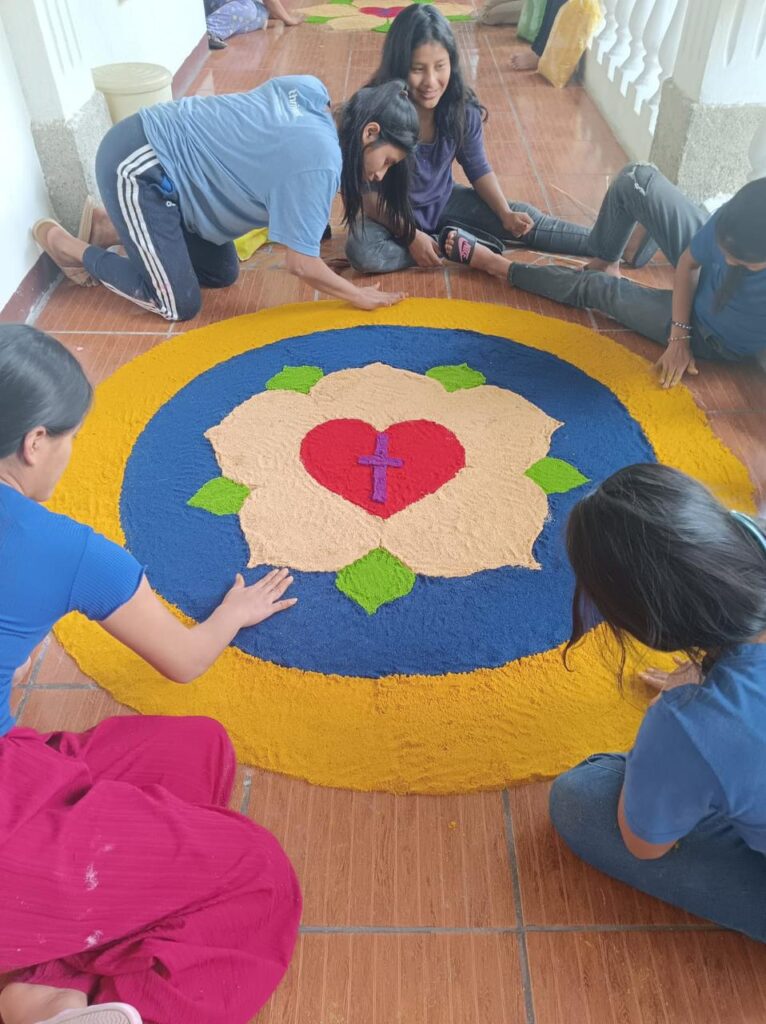
At Milagro, the process begins with the acquisition of sawdust, its dyeing, and the design of the patterns, based on what each group wishes to represent and express. On this occasion, the young women organized themselves into three groups and decided to portray the Lutheran rose because of its profound meaning, especially during this time when we commemorate the resurrection of Jesus Christ, who conquered death and has given us the gift of salvation.
Las alfombras de Semana Santa en Guatemala son expresiones de arte efímero que fusionan fe, tradición y sincretismo cultural. Elaboradas principalmente con aserrín de colores, corozo y flores, representan una ofrenda de devoción y agradecimiento a Jesús Nazareno. Esta práctica forma parte de una tradición profundamente arraigada en el país.
En la ILAG, la elaboración de alfombras se realiza como parte de esta herencia cultural y también como una expresión tangible de nuestra fe. Guatemala es, en gran medida, una cultura oral; por ello, las expresiones visibles y concretas son fundamentales tanto para comunicar como para comprender la historia y los procesos de aprendizaje. En este sentido, las alfombras se convierten en una manifestación de la teología popular.
En Milagro, el proceso inicia con la adquisición del aserrín, su teñido y el diseño de los dibujos, según lo que cada grupo desea representar y expresar. En esta ocasión, las mujeres jóvenes se organizaron en tres grupos y decidieron representar la rosa luterana por su profundo significado, especialmente en el tiempo en que recordamos la resurrección de Jesucristo, quien venció la muerte y nos ha dado el regalo de la salvación.
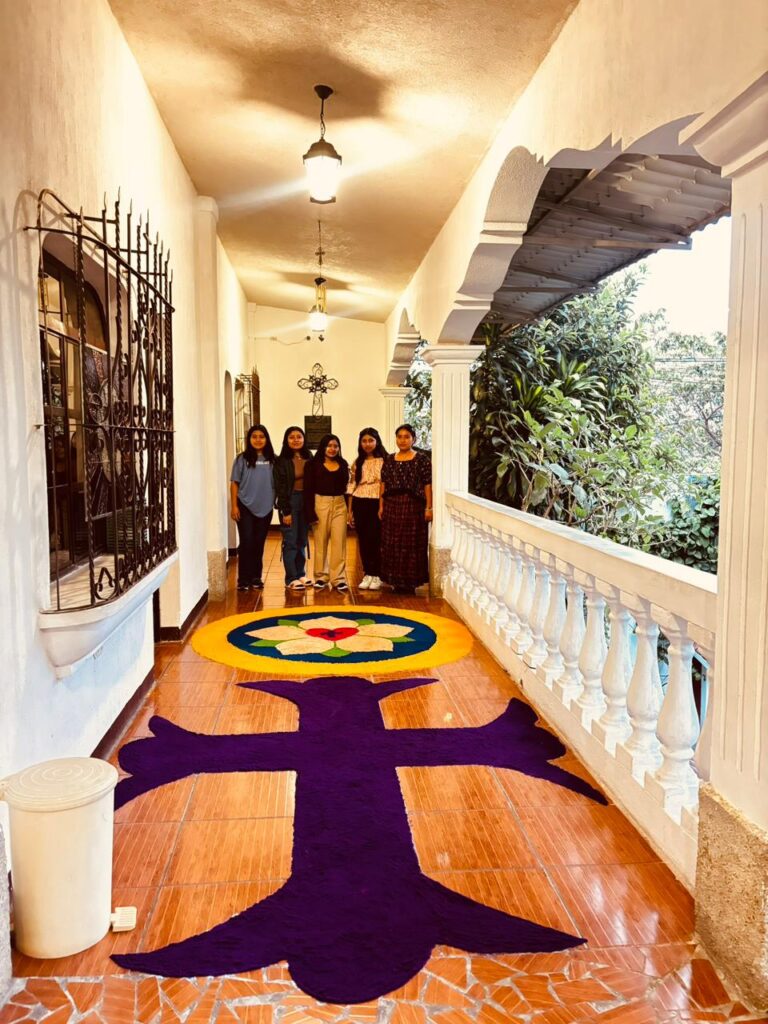
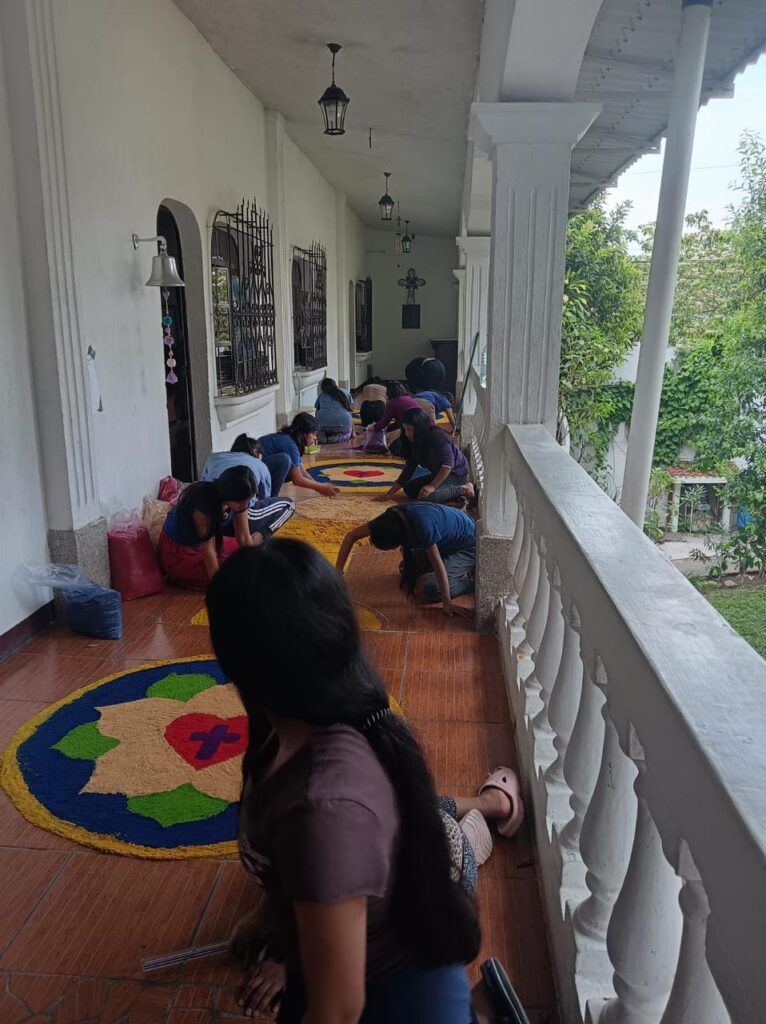
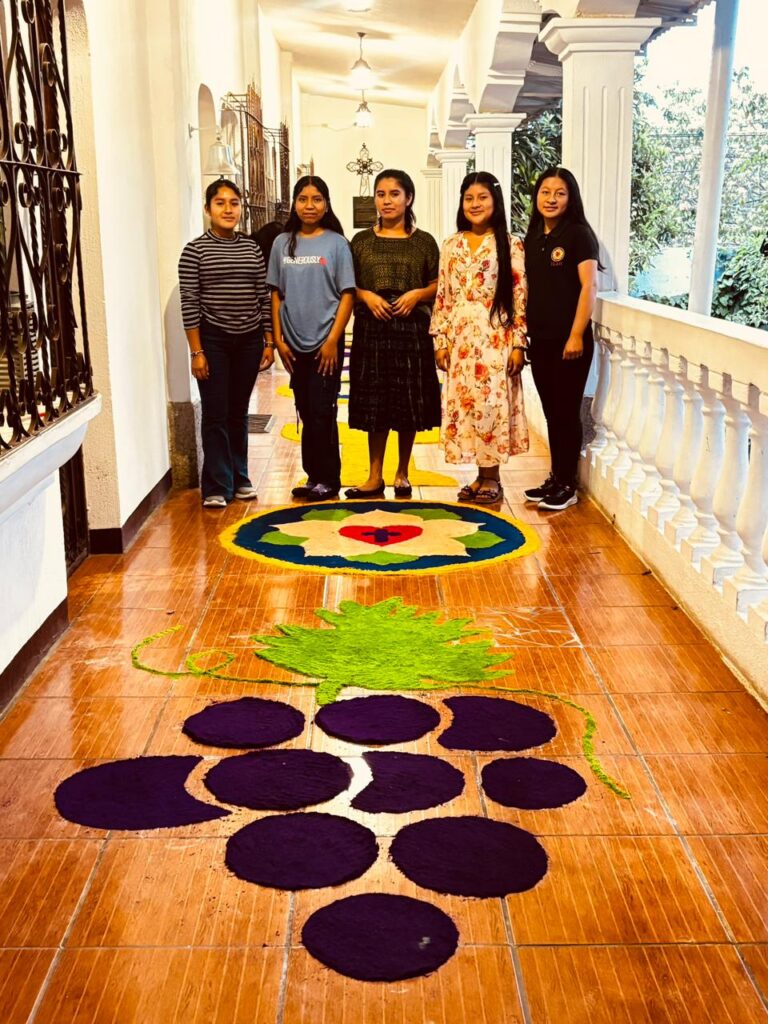
They also depicted grapes—from which wine is made—as a symbol of nature, emphasizing the use of natural elements. They also included the chalice and the bread, which represent the body and blood of Christ, and the cross, recalling the theology of the cross.
Ellas también representaron uvas —de las cuales proviene el vino— como símbolo de la naturaleza, resaltando el uso de elementos naturales y ecológicos. Asimismo, incluyeron el cáliz y el pan, que representan el cuerpo y la sangre de Cristo, y la cruz, recordando la teología de la cruz.